House Smells Musty After Cleaning? 7 Hidden Causes | USA Homewise
Why Does My House Smell Musty Even After Cleaning? 7 Hidden Causes You Shouldn’t Ignore
A musty smell that survives cleaning often points to moisture you haven’t found yet. Check these seven potential sources, learn what you can safely inspect, and know when professional help is needed.
Why Does My House Smell Musty Even After Cleaning? 7 Hidden Causes You Shouldn’t Ignore
A house that smells musty even after cleaning often has a moisture problem, not a housekeeping problem. Cleaning removes surface dirt, but it cannot repair a concealed leak, empty an HVAC drain pan, or dry carpet padding beneath a clean-looking floor.
The most likely places to investigate are high-humidity rooms, plumbing, exterior leaks, basements and crawl spaces, HVAC equipment, appliances, and damp belongings.
A musty smell does not prove that mold is present. Odor alone cannot identify mold, locate all affected materials, or establish a health risk. Still, persistent mustiness deserves attention—especially when it comes with condensation, staining, swelling, or recurring dampness.
Start With the Odor Pattern, Not Another Deep Clean
Before using more cleaning products, note where the smell is strongest and when it returns. Temporarily avoiding fragrances can make the underlying odor easier to track.
When or where you notice mustiness
What to investigate first
Throughout the house during humid weather
Indoor humidity and exhaust ventilation
Near a sink cabinet, toilet, or bathroom wall
Plumbing leaks
After rain or melting snow
Roof, window, siding, or foundation water entry
Downstairs or near crawl-space access
Below-grade moisture and damp storage
When the air conditioner starts
HVAC drainage, damp components, or circulated odors
Near the washer or dishwasher
Appliance residue, leaks, or drainage trouble
Around carpet, furniture, or closets
Damp porous materials and restricted airflow
Start with a flashlight and accessible surfaces. A hygrometer can help you track room humidity. Record stains or wet spots so you can tell whether they change after rain or normal fixture use; do not deliberately run water through a suspected leak.
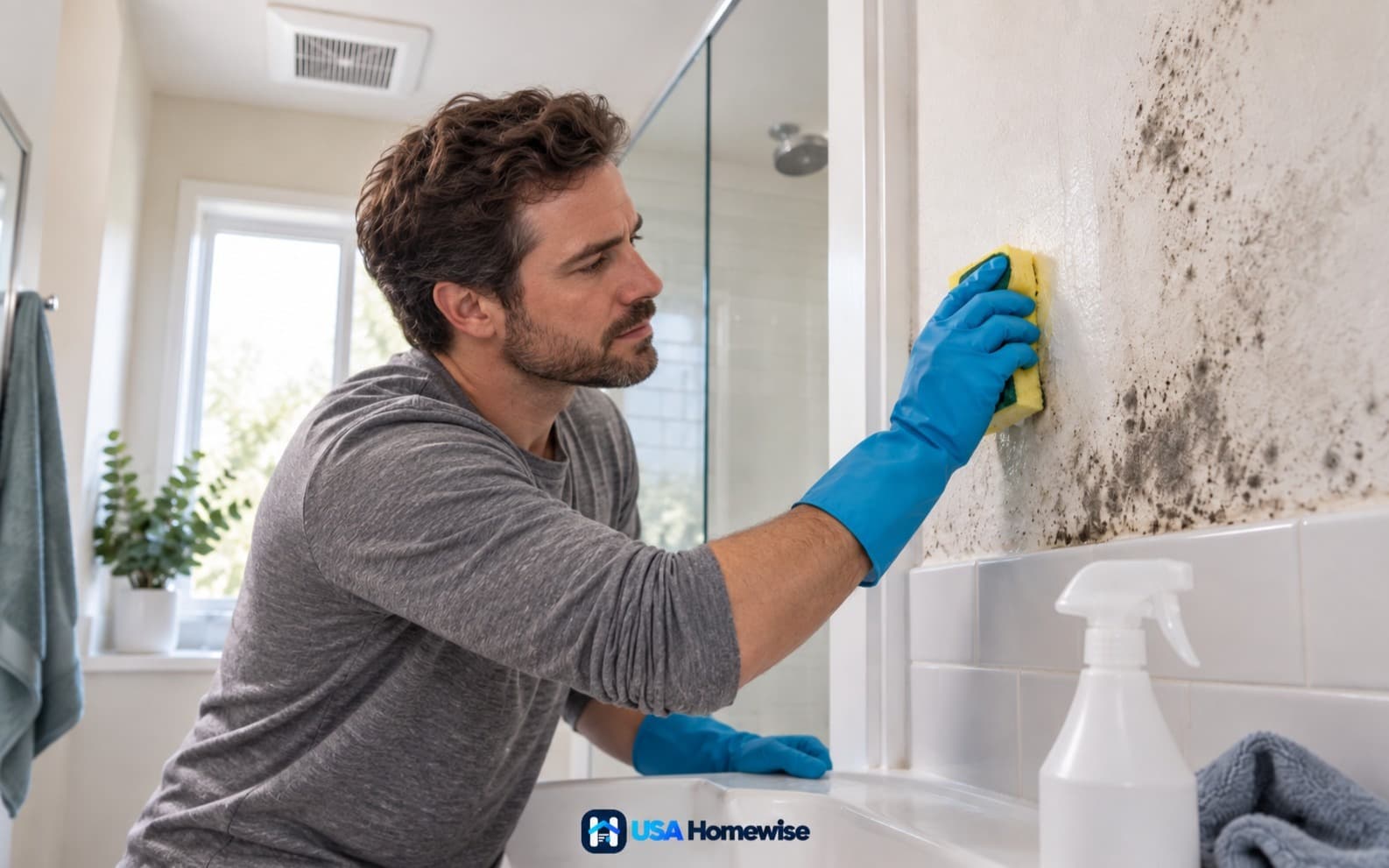
Small mold patches on intact, washable bathroom walls may be manageable with careful cleaning. Learn when to use detergent and water, when damaged materials need professional attention, and how to address the moisture behind recurring growth.
Do not cut into drywall, lift suspect flooring, remove HVAC service panels, or enter an unsafe crawl space to follow an odor.
Stop if you find standing water near electrical equipment, a sagging ceiling, sewage, or extensive visible growth. Keep people away and contact the appropriate professional. If the odor might be fuel gas rather than mustiness, leave without operating switches or appliances, then call the gas utility or emergency services from outside.
1. High Indoor Humidity Is Keeping Materials Damp
A clean home can smell stale when moisture lingers in the air and on cool surfaces. Closets, exterior-wall corners, and spaces behind furniture can stay damp even when the middle of the room feels comfortable.
Shower steam, indoor clothes drying, inadequate exhaust ventilation, and humid outdoor air can all contribute.
What to check
Measure relative humidity in the affected room and elsewhere for comparison.
Check readings at different times, including after showers and during humid weather.
Look for condensation on windows and cold pipes.
Check whether bathroom fans and the clothes dryer exhaust outdoors—not into an attic or crawl space. Have inaccessible duct routing checked professionally.
Aim for 30%–50% indoor relative humidity when practical, and keep it below 60%. Cold weather may require a lower setting to prevent condensation on windows or walls. A normal room reading does not rule out a damp pocket behind furniture.
What helps
Use bathroom exhaust fans and an outdoor-vented kitchen hood during moisture-producing activities. A recirculating range hood does not exhaust cooking moisture outdoors.
Use a properly sized dehumidifier if needed, and clean its reservoir and filter according to the manual. Opening windows is useful only when outdoor conditions support drying; muggy air can make the problem worse.
If humidity stays high, have an HVAC professional assess ventilation, cooling performance, and moisture removal.
2. A Small Plumbing Leak Is Soaking Hidden Materials
A slow supply or drain leak can wet cabinet bases, drywall, or flooring without leaving an obvious puddle. The surface you clean may not be the material producing the odor.
What to check
Empty sink cabinets and inspect their bases and visible pipe connections.
Look for swollen wood, peeling finishes, discoloration, or damp belongings.
Inspect accessible areas around toilets, tubs, and showers.
Note whether dampness appears after normal use of a particular fixture.
A dry paper towel can reveal moisture on an accessible pipe connection. However, moisture on a cold pipe may be condensation rather than a leak. Do not loosen fittings or remove a toilet to investigate.
What helps
Stop using the affected fixture when practical and call a plumber for an active or concealed leak. A known, accessible fixture shutoff may stop a supply leak if it operates safely; never force a stuck valve.
Fixing the leak does not automatically fix the wet materials. Drywall, insulation, cabinets, or flooring may also need professional drying or removal. Aim to dry newly wetted materials within 24–48 hours to reduce the likelihood of mold growth. This is a prevention window, not a guarantee or a reason to assume older damage is harmless once dry.
3. Rainwater Is Entering Through the Exterior
Mustiness that follows storms can point to a roof, flashing, window, siding, or foundation leak. Water can travel through an assembly, so an interior stain may not sit directly beneath the entry point.
What to check
From the ground or another safe location, look for:
New ceiling or wall stains after rain.
Damp window trim or peeling paint.
Overflowing gutters or disconnected downspouts.
Water pooling beside the foundation.
Ground or pavement that directs runoff toward the house.
Do not climb onto a wet roof or enter an attic with unsafe access, damaged framing, or uncertain walking surfaces.
What helps
Have gutters, downspouts, and drainage defects corrected safely. A roofer or building-envelope professional should assess suspected roof, flashing, window, or siding failures.
Avoid applying surface caulk indiscriminately: it can miss the actual defect or block an intended drainage path. Repair the entry point and assess the affected materials before painting over interior stains.
4. A Basement or Crawl Space Is Staying Damp
Groundwater, foundation seepage, exposed soil, plumbing leaks, and condensation can keep below-grade spaces wet. Odors can then move into living areas through openings and air movement.
What to check
From a safe doorway or access opening, look for:
Water marks, damp masonry, or recurring puddles.
Exposed earth or a damaged ground vapor barrier.
Wet insulation or damp wood.
Cardboard boxes and fabrics stored against walls or on the floor.
Signs that a sump pump is not managing water, if one is installed.
Do not enter a crawl space with standing water, electrical hazards, sewage, damaged supports, or extensive suspected mold.
What helps
Address water entry and drainage before relying on a dehumidifier. Move unaffected belongings away from damp surfaces. Once items are dry, suitable storage containers can help keep them off damp floors; do not seal damp items inside containers.
A qualified drainage, crawl-space, or building-performance professional can determine whether you need groundwater management, a continuous ground vapor barrier, air sealing, or a designed conditioning strategy. Opening crawl-space vents is not a universal fix and can worsen condensation in warm, humid weather.
5. The HVAC System Has a Moisture or Drainage Problem
Air conditioning removes water from indoor air as it cools. That condensate must drain away. A blocked drain, standing water in a pan, or damp insulation near equipment can contribute to mustiness.
An odor at the vents does not necessarily mean the ducts are its source. The system may be circulating an odor from elsewhere.
What to check
Notice whether the odor begins or intensifies during cooling.
With the system off, check the user-accessible filter as the manufacturer directs.
Look for water around the indoor unit without removing service panels.
Note weak airflow, persistently high humidity, or inadequate cooling.
For related symptoms, see AC Running but Not Cooling the House? 9 Things That Could Be Wrong.
What helps
If the unit is leaking water, turn cooling off at the thermostat if safe and arrange service. If you suspect mold contamination inside the HVAC system, avoid running it until a qualified professional evaluates it.
An HVAC technician should inspect inaccessible coils, drain pans, condensate lines, and internal insulation. Replacing a filter alone will not resolve a wet compartment or blocked drain.
Do not spray fragrances, disinfectants, or mold treatments into return grilles. Duct cleaning is not the default fix for a musty house; establish whether the system is contaminated and correct the moisture source first.
6. An Appliance Is Holding Moisture or Draining Poorly
Washers and dishwashers can develop localized odors from wet seals, residue, trapped debris, or drainage trouble. Small leaks can also dampen adjacent cabinets and flooring.
What to check
Inspect accessible washer door seals and detergent drawers as the manual allows.
Remove wet laundry promptly.
Check user-serviceable dishwasher filters according to the manufacturer's instructions.
Look for damp flooring or cabinet bases beside appliances.
Check safely visible dryer exhaust connections for damage or disconnection.
A small amount of water in a dishwasher sump can be normal. A new or persistent pool in the tub warrants attention. See Why Is My Dishwasher Not Draining? What to Check Before Calling a Repair Technician for related troubleshooting.
What helps
Follow the manufacturer's cleaning cycle and product recommendations. Leave a washer door or lid open to dry only when the manual permits it and children and pets cannot access the appliance.
Turn appliances off before user-serviceable cleaning and follow the manual's power-disconnection precautions. Never mix cleaning chemicals or pour drain cleaner into an appliance.
Do not pull out heavy appliances or disconnect hoses just to follow a smell. Recurring water, damaged hoses, or suspected internal leaks call for an appliance technician or plumber. Stop using a dryer with a disconnected or damaged exhaust until it is repaired.
7. Carpet, Furniture, or Stored Belongings Are Still Damp
Porous materials can retain moisture beneath a dry-looking surface. Carpet padding after a spill, upholstery against a damp wall, and boxes in a humid basement are common places to investigate.
Recent carpet cleaning can also leave lingering moisture if the carpet and padding do not dry adequately.
What to check
Identify whether the smell is concentrated around a rug, sofa, closet, or storage area.
Inspect safely accessible undersides and nearby surfaces for dampness or staining.
Consider previous spills, leaks, flooding, or carpet cleaning.
Look for tightly packed belongings that restrict airflow.
Do not shake, brush, or drag visibly moldy belongings through living areas.
What helps
For recently damp items without suspected mold or contaminated-water exposure, begin drying promptly and follow the material's care instructions. Avoid directing fans across visible mold or contaminated materials.
Moldy absorbent materials can be difficult or impossible to clean completely. Carpet padding, insulation, ceiling tiles, and heavily affected upholstery may need removal rather than deodorizing. Have sewage-contaminated materials handled professionally.
Fragrance sprays, baking soda, and repeated shampooing cannot repair water entry or resolve hidden wet padding.
When to Call a Professional for a Musty House
Arrange an evaluation when:
The odor persists despite humidity control and accessible checks.
Mustiness returns after rain or each cooling cycle.
You suspect wet materials inside walls, ceilings, or floors.
You find extensive water damage, sewage contamination, or suspected HVAC contamination.
Visible mold covers more than about 10 square feet.
Cleanup could expose someone with asthma, chronic lung disease, significant allergies, or a weakened immune system.
The 10-square-foot guideline is a general cleanup screening point—not a boundary between safe and unsafe conditions. Hidden damage, contaminated water, difficult access, and health concerns can justify professional help for a smaller area.
Likely problem
Professional to contact
Supply or drain leak
Plumber
AC drainage or internal moisture
HVAC technician
Roof or exterior water entry
Roofer or building-envelope specialist
Foundation or crawl-space moisture
Qualified drainage or building-performance professional
Wet or mold-affected materials
Qualified water-damage restoration or mold-remediation professional
Persistent odor with no clear source
Independent moisture-assessment professional
For a small, appropriate DIY mold cleanup on a hard surface, detergent and water followed by thorough drying may be suitable. Wear protective gloves, goggles, and a properly fitting N95 respirator; people at higher risk should not perform the cleanup. Hidden, extensive, sewage-related, or HVAC contamination is not a routine DIY cleaning job.
Routine mold air testing is generally not the first step when visible growth already establishes a problem. For an unexplained smell, begin with a moisture investigation rather than assuming a test kit will locate the source. Seek medical advice for persistent symptoms rather than using odor intensity to judge health risk.
Keep the Smell From Returning
After repairs, recheck the area under the conditions that previously triggered the odor, such as rain, showers, laundry, or cooling operation.
Monitor humidity and watch for condensation.
Maintain exhaust fans, appliance seals, filters, and condensate drainage.
Keep belongings away from damp floors and walls.
Watch repaired areas for renewed odor, swelling, staining, or moisture.
Do not paint or seal over wet or contaminated materials.
The lasting solution is to stop the moisture, dry or remove affected materials, and clean appropriately. If the mustiness returns, investigate further rather than treating another round of deodorizing as the repair.
Frequently asked questions
Does a musty smell always mean there is mold?
No. Damp fabrics, appliance residue, and other sources can produce musty odors. Mold is one possibility, including hidden growth, but smell alone cannot confirm it or establish a health risk. Persistent mustiness warrants a moisture investigation.
Will a dehumidifier get rid of a musty house smell?
It may help if excess humidity is keeping materials damp. It will not repair a leak, remove mold-affected materials, or reliably dry enclosed wall cavities. Use it alongside moisture-source repairs and appropriate drying or removal.
Why does my house smell musty when the AC turns on?
Possible causes include condensate drainage problems, damp HVAC components, or an odor elsewhere that the system circulates. Check the user-accessible filter and look for water around the indoor unit. Leave internal inspections to an HVAC technician, and avoid running the system if you suspect mold contamination inside it.
Can a house smell musty without a visible leak?
Yes. High humidity, condensation, damp stored items, and appliance residue can cause odors without an obvious leak. Water may also be concealed inside walls or beneath flooring. Track the odor's location and timing, then arrange a moisture assessment if accessible checks do not reveal the source.
Should I use bleach to get rid of a musty smell?
Bleach is not a general odor remedy and is not routinely necessary for mold cleanup. Small, appropriate hard-surface cleanups may call for detergent, water, protective equipment, and thorough drying; moldy porous materials may need replacement. Never mix bleach with ammonia, acids, or other cleaners.
Can an air purifier solve a musty smell?
An air purifier does not repair leaks, dry materials, or remove mold growing on surfaces. Filtration may supplement cleanup, but it is not a substitute for finding and correcting the moisture source.