AC Running but Not Cooling? 9 Causes and Safe Checks | USA Homewise
AC Running but Not Cooling the House? 9 Things That Could Be Wrong
A running fan does not necessarily mean your AC is removing heat. Check settings, filters, and airflow first, then learn which symptoms mean it is time to stop the system and call a professional.
AC Running but Not Cooling the House? 9 Things That Could Be Wrong.
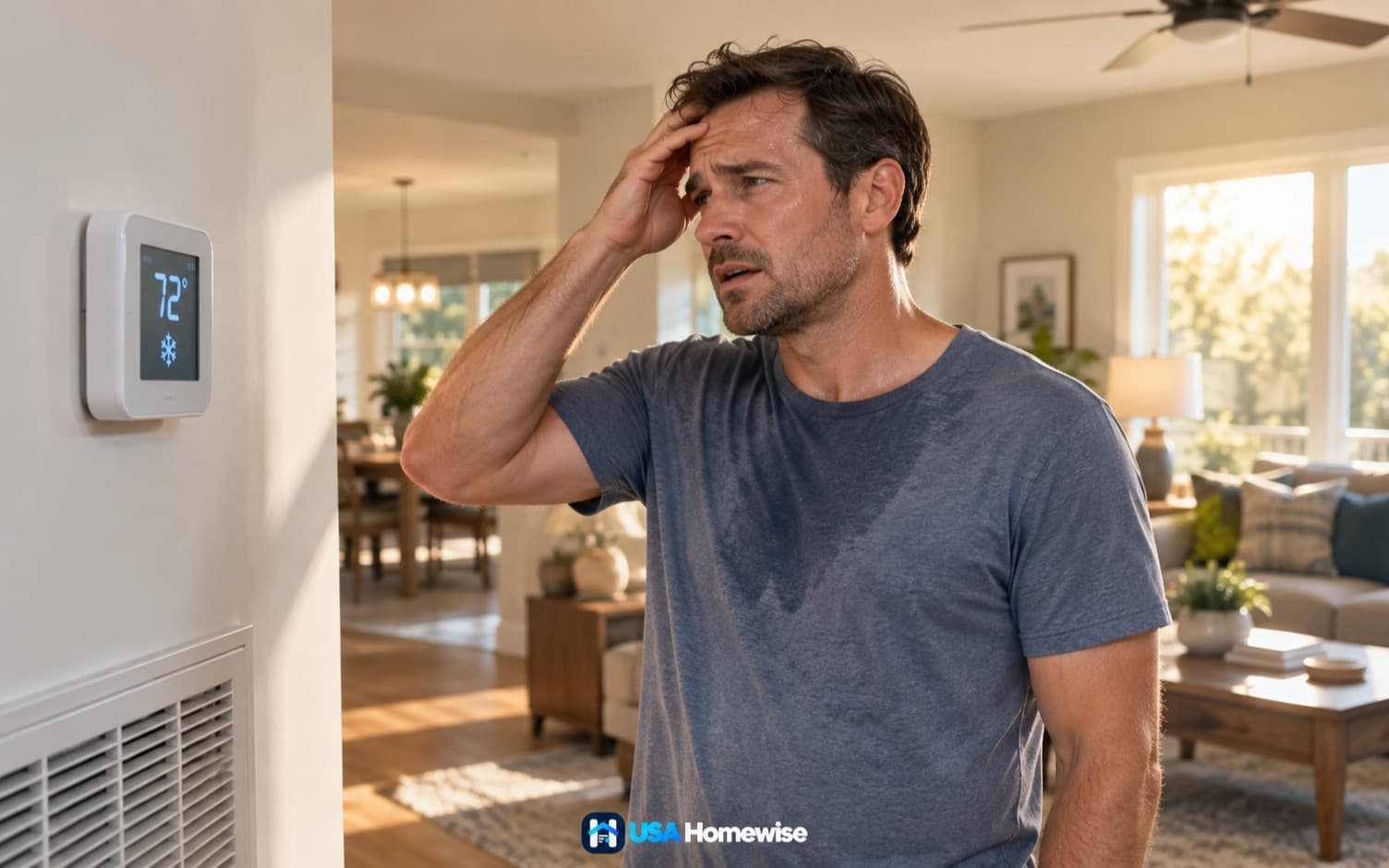
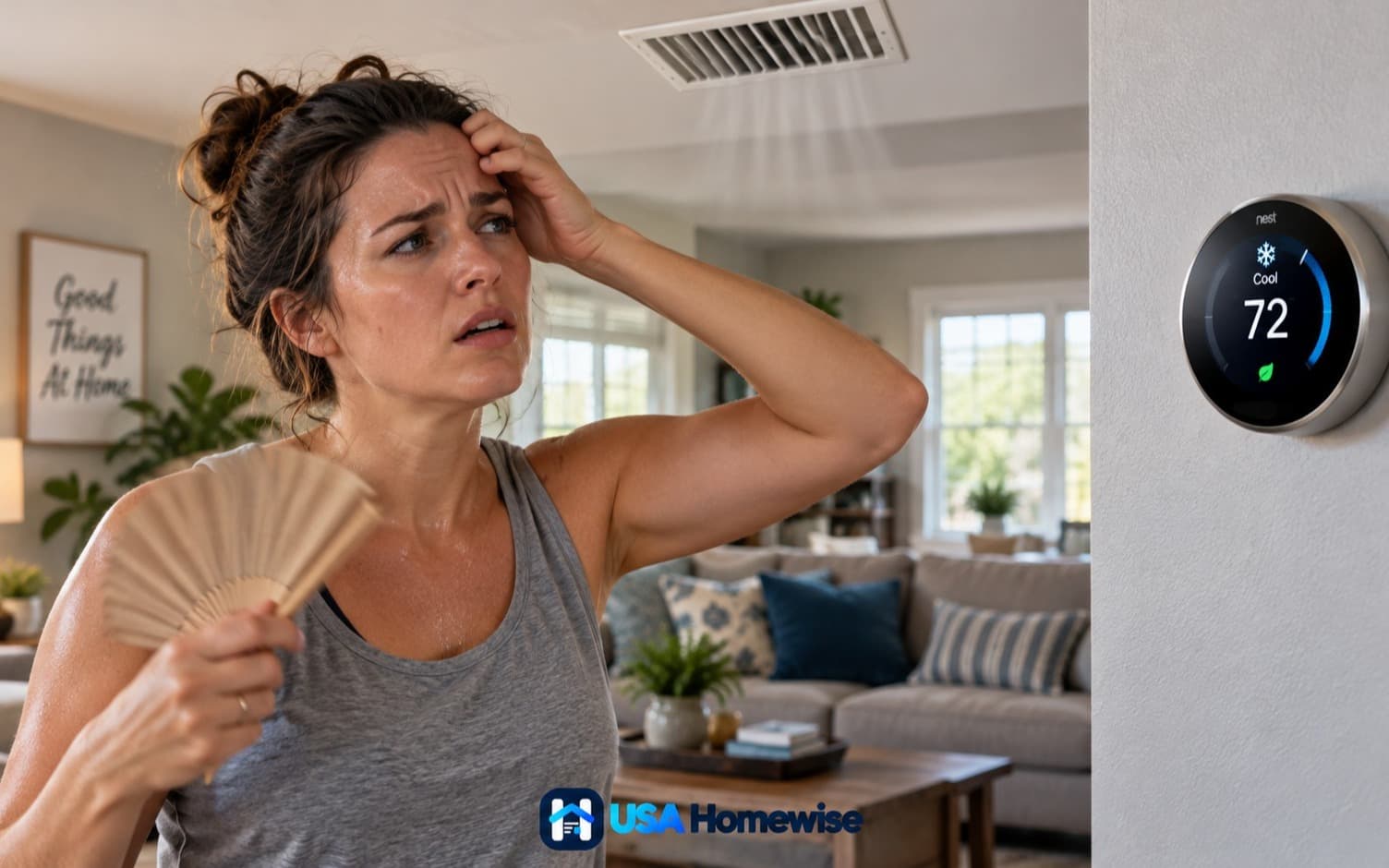
If your AC is running but not cooling the house, the sound you hear may be the indoor fan circulating air without active cooling. Possible causes range from an incorrect thermostat setting or clogged filter to a frozen coil, outdoor-unit fault, or refrigerant leak.
Start with Cool mode, the fan set to Auto, a clean filter, and unobstructed vents. If you see ice, smell burning, hear harsh mechanical noises, or notice a tripped breaker, stop cooling and arrange professional service instead of repeatedly restarting the system.
This guide covers central air conditioners and ducted heat pumps in cooling mode. For window, portable, and ductless units, follow the equipment manual because filters, drainage, and controls differ.
Start Here: Safe Checks Before Troubleshooting
If indoor heat is becoming unsafe, move people and pets to an air-conditioned location rather than waiting for a repair. Infants, older adults, and people with certain health conditions are especially vulnerable. Do not rely on fans alone to keep someone safe in extreme heat.
If there are no urgent warning signs:
Set the thermostat to Cool and the fan to Auto.
Set the target a few degrees below the displayed room temperature.
Allow for the normal startup delay described in the equipment manual. Avoid repeated on-off cycling.
Compare airflow at several supply vents and check that return grilles are clear.
Observe the outdoor unit from a safe distance, without opening covers or reaching through the grille.
Look for visible ice or unusual water around accessible equipment.
Electrical safety: Turning the thermostat off does not disconnect electrical power. Before manufacturer-approved maintenance, follow the manual's shutdown and power-isolation instructions. Indoor and outdoor equipment may have separate power supplies, and capacitors can retain a dangerous charge. Do not open electrical compartments or touch wiring.
Strange HVAC noises can come from restricted airflow, vibrating grilles, or equipment faults. Use the sound, location, and timing to decide what you can safely check and when professional service is needed.
Fan-only operation, outdoor-unit failure, or a refrigeration fault
Check settings and observe whether the outdoor unit operates
Airflow is weak throughout the house
Restricted filter, blocked return, frozen coil, or blower fault
Check accessible filters and grilles; stop cooling if you see ice
Only certain rooms are hot
Blocked registers, duct problems, or uneven heat gain
Clear grilles and compare room-to-room airflow
Ice is visible on a line or indoor equipment
Restricted airflow or a refrigeration fault
Turn cooling off; do not chip off the ice
Water appears around indoor equipment
Drainage trouble or melting ice
Stop cooling if water is leaking; arrange service and avoid wet electrical equipment
Cooling falls behind mainly on hot afternoons
High heat gain, reduced performance, or equipment limitations
Reduce heat gain and consider whether the behavior is new
These clues narrow the possibilities; they do not confirm which part has failed.
1. The Thermostat Is Set Incorrectly
The indoor blower can operate without the air conditioner actively cooling. When the fan is set to On, it may keep circulating air between cooling cycles, making the air at the vents feel warmer than expected.
What to check
Confirm the mode is Cool, not Heat, Off, or fan-only.
Check that the cooling setpoint is below room temperature.
Review schedules, vacation settings, and energy-saving adjustments.
Replace thermostat batteries if the model uses them and indicates they are low.
Check the manual for any displayed error message or startup delay.
If the problem began after a thermostat installation or reset, ask the installer to check equipment compatibility and configuration. Do not move thermostat wires yourself.
Setting the target extremely low generally does not make the house cool faster; it mainly keeps the system calling for cooling longer.
2. The Air Filter Is Restricting Airflow
A dirty filter can reduce airflow across the indoor evaporator coil. This weakens cooling and can contribute to coil icing.
What you can safely do
Shut down the system as directed before removing a homeowner-accessible filter. Check the designated filter locations, which may include return grilles or a filter slot near the air handler. Do not open service compartments to search for a filter.
Replace a dirty disposable filter with the correct size and an efficiency level suitable for the system. Install it with the airflow arrow pointing in the direction specified by the equipment instructions, generally toward the blower. Clean reusable filters only as directed and let them dry as instructed before reinstalling them.
Do not run the AC without a filter as a workaround. A higher-efficiency filter is not automatically a better choice if it restricts airflow beyond what the system can handle.
If airflow stays weak with the correct clean filter, an HVAC technician should check the blower, coil, and ducts.
3. Supply Vents or Return Grilles Are Blocked
Your AC needs clear paths both to deliver cooled air and to bring room air back to the equipment. Furniture, rugs, curtains, and stored items can block those paths.
What to check
Walk through the house and:
Uncover supply registers and return grilles.
Open adjustable supply registers that were accidentally closed.
Look for recent furniture changes that obstruct airflow.
Notice whether rooms become warmer when their doors are shut.
Avoid closing many registers to force cooling into one room. Doing so can increase duct pressure and reduce system airflow rather than solve the problem.
If a room remains hot with clear grilles, have a professional evaluate duct balance and return-air pathways. Leave unfamiliar balancing dampers alone.
4. The Indoor Evaporator Coil Is Frozen
The evaporator coil absorbs heat from indoor air. Ice interferes with that process and further restricts airflow. Restricted airflow and refrigerant-related faults are possible causes.
Warning signs include visible ice on an accessible refrigerant line, airflow that becomes progressively weaker, and water appearing as the ice melts. The coil is often hidden, so do not open a service compartment to inspect it.
What to do if you see ice
Turn cooling off. Do not keep operating the compressor to try to cool the house.
Check the accessible filter and grilles for obvious restrictions.
Let the ice melt naturally. Do not chip it away or use a hair dryer, heat gun, or other heat source.
Watch for meltwater without approaching wet electrical components.
Fan-only operation may help thaw the coil if the manufacturer permits it and the blower and drainage are working normally. If water is leaking, the blower is not working, or you are unsure, leave the system off and call for service.
Thawing is not a repair. If you correct an obvious filter or grille restriction, wait until all ice has melted before any restart permitted by the manual. If the cause is unclear or ice returns, stop cooling and have an HVAC technician diagnose it.
5. The Outdoor Condenser Cannot Release Heat Effectively
The outdoor unit releases heat collected from inside the house. Vegetation, leaves, accumulated dirt, or a cover left on the unit can interfere with airflow and heat transfer.
What you can safely do
With the equipment shut down according to the manual, remove an exterior seasonal cover and clear loose obstructions around the cabinet. Maintain the manufacturer's specified clearance around and above the unit. Do not store items against it.
Keep hands and tools outside the grille. Leave debris inside the cabinet to a professional unless the manual provides a specific safe homeowner procedure.
Do not use a pressure washer or aggressively brush the delicate coil fins. Wash coils only if the manufacturer provides homeowner instructions, including power isolation, water direction, and approved cleaning products. Otherwise, schedule professional cleaning.
An outdoor unit that looks clean can still have an electrical or mechanical problem.
6. The Outdoor Unit or Compressor Is Not Operating Properly
If the indoor blower runs but the outdoor unit does not, the system may move air without removing heat. Even a spinning outdoor fan does not prove the compressor is working.
Possible causes include a failed capacitor, contactor, motor, compressor, control component, or a power-supply problem. Depending on how the system is wired, a condensate overflow safety switch may also interrupt cooling while allowing the blower to operate.
When to stop and call for service
Turn cooling off and contact an HVAC professional if:
The outdoor unit remains silent during a cooling call after the normal startup delay.
It hums or buzzes without starting normally.
It repeatedly attempts to start or shuts down unexpectedly.
You hear grinding or other harsh mechanical noises.
You notice a tripped breaker or burning odor.
Do not push the fan with a stick, replace a capacitor, open an electrical compartment, or reset a tripped breaker to keep troubleshooting. A breaker trip can indicate an equipment or electrical fault.
If water is collecting around indoor equipment, do not bypass a condensate safety switch. Have the drainage problem diagnosed.
A thermostat shutdown does not remove electrical power. If you see smoke or active arcing, keep away, leave the area, and call 911 for a suspected fire. Do not approach hazardous equipment to disconnect it.
7. The System Has a Refrigerant Leak or Incorrect Charge
Refrigerant transfers heat between the indoor and outdoor coils. It is not fuel that an air conditioner normally uses up. An incorrect charge can result from a leak or an installation or service error.
Poor cooling, long run times, and icing can occur with refrigerant problems, but they also occur for other reasons. None of these symptoms alone proves the AC needs refrigerant.
Why a professional is required
A qualified HVAC technician should evaluate airflow and operating conditions before checking refrigerant charge with the equipment-specific procedure. Suspected leaks also need investigation.
Do not use DIY recharge kits or add sealant. Improper refrigerant handling can injure you, damage equipment, and release refrigerant. In the United States, service that could release regulated refrigerants generally requires EPA Section 608 technician certification.
If the charge is low, ask what caused it and what repair is recommended. Repeatedly adding refrigerant without addressing a leak is not a lasting solution.
8. Leaky, Disconnected, or Poorly Insulated Ducts Are Losing Cooling
Your AC may cool air that never reaches the rooms that need it. A disconnected supply duct can discharge cooled air into an attic or crawl space. Return-side leaks can draw hot air into the system, and ducts in hot spaces can gain heat where insulation is missing or damaged.
Clues to look for
One room suddenly has much less airflow.
Cooling is noticeably uneven between rooms.
A duct section visible from a safe location is loose or damaged.
The problem began after work near ductwork.
Limit inspection to safely accessible locations. Do not enter an overheated attic, step off attic flooring, or crawl around exposed wiring or contaminated insulation.
An HVAC or qualified home-performance professional can assess leakage, insulation, and airflow balance. Ordinary cloth duct tape is not a durable duct-sealing repair.
9. Heat Gain or System Sizing Is Exceeding Available Cooling
Sometimes the AC is cooling, but the house gains heat as fast as—or faster than—the equipment removes it. Strong sun, air leaks, inadequate insulation, open windows, and heat-producing appliances can contribute.
An undersized system may struggle during high demand. However, long run times alone do not establish a sizing problem. Variable-capacity systems may run for extended periods by design, and other systems may run nearly continuously during demanding weather.
What you can do now
Close windows and exterior doors.
Shade sun-exposed windows with curtains or blinds.
Limit oven use and other avoidable indoor heat sources during the hottest hours.
Use fans for personal comfort, without treating them as protection from unsafe heat.
Compare performance with similar weather in previous years, if possible.
If the same system previously kept the house comfortable under similar conditions, investigate maintenance and repair issues before blaming its size. Some cooling at the vents does not rule out a performance problem.
Before replacing equipment, request a residential load calculation, commonly performed using ACCA Manual J, along with a duct evaluation. Selecting a larger AC solely by floor area can cause short cycling and inadequate humidity control.
When to Call an HVAC Professional
Arrange service if the thermostat settings, filter, and accessible airflow paths are correct but the house still does not cool. Stop cooling sooner for ice, repeated failed starts, a tripped breaker, burning odors, abnormal mechanical noises, or leaking water that could damage the home or reach electrical equipment.
To help the technician, record:
When the problem started and whether it is constant or intermittent.
The thermostat setting and displayed room temperature.
Whether airflow is weak everywhere or only in certain rooms.
Whether the outdoor unit appears to operate.
Any ice, water, unusual sounds, or error messages.
Recent filter changes, thermostat work, or renovations.
The practical dividing line: homeowners can check settings, maintain accessible filters, and clear airflow obstructions. Electrical diagnosis, refrigerant work, and internal equipment repairs belong to qualified professionals.
Frequently asked questions
Why is my AC blowing air but not cooling the house?
The indoor fan may be running without active cooling. Other possibilities include a restricted filter, frozen coil, outdoor-unit fault, refrigerant problem, or duct leakage. Start with Cool mode, the fan set to Auto, a suitable clean filter, and clear vents. If those checks do not help, schedule HVAC service.
Should I turn off my AC if it is not cooling?
Turn cooling off if you see ice, smell burning, hear harsh mechanical noises, notice repeated failed starts, or find a tripped breaker. Leaking water also requires prompt attention. Without warning signs, you can check settings and accessible airflow paths, but do not keep restarting a malfunctioning system.
Can a dirty filter make an AC stop cooling?
Yes. A restricted filter can reduce airflow across the indoor coil, weaken cooling, and contribute to freezing. Replace or clean the filter according to the equipment instructions. If airflow remains weak or ice returns, have a professional diagnose the system.
Does an air conditioner need refrigerant added every year?
No. Refrigerant circulates through a closed system and is not normally consumed. A low charge can indicate a leak or an installation or service error. A qualified, appropriately certified technician should identify the cause rather than simply add refrigerant repeatedly.
Is it normal for an AC to run all day in hot weather?
Long run times can be normal in demanding weather, and variable-capacity systems may run for extended periods by design. However, a house that keeps getting warmer, a new loss of cooling, visible ice, or abnormal noises warrants investigation.
Why is the indoor AC fan running while the outdoor unit is off?
The thermostat fan may be set to On, or the system may be between cooling cycles or in a normal startup delay. If the outdoor unit stays off during a cooling call beyond that delay, an electrical, control, or safety-switch issue may be preventing operation. Turn cooling off and arrange service rather than opening the unit or bypassing a safety device.