Water Stains on the Ceiling: How to Find the Leak | USA Homewise
Water Stains on the Ceiling? How to Find the Leak Before It Gets Worse
The source of a ceiling water stain may not be directly above it. Use weather, fixture use, and AC operation to narrow down the cause—without opening a wet ceiling or creating more damage.
Water Stains on the Ceiling? How to Find the Leak Before It Gets Worse
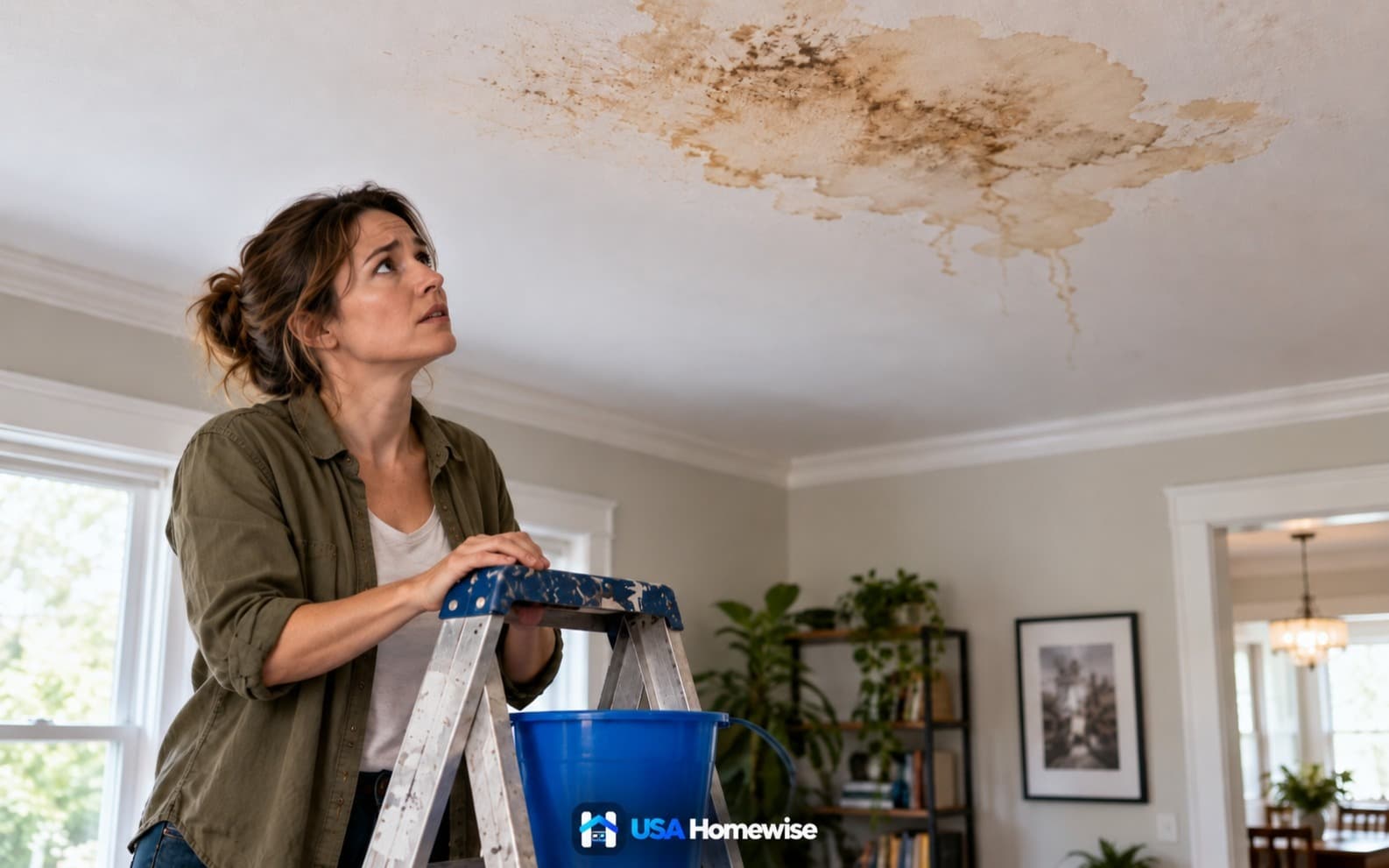
Water stains on the ceiling deserve investigation, even when the surface looks dry. A yellow or brown mark can result from a roof leak, leaking plumbing, an overflowing AC condensate system, or condensation. Water can travel along framing, pipes, and other surfaces before reaching the ceiling, so the source may not be directly above the stain.
First rule out collapse and electrical hazards. Then compare the stain’s location with when it appears: during rain, after plumbing use, or while the AC runs. Those observations can help a professional locate the problem without unnecessary demolition.
Do not repaint until the moisture source is corrected and affected materials are dry and sound.
First, Check for Ceiling and Electrical Hazards
Keep people and pets away if you notice:
Sagging drywall, bulging paint, falling material, or new cracking around the wet area.
Steady dripping or a stain that is spreading quickly.
Water coming through a light fixture, ceiling fan, smoke alarm, or other electrical device.
Do not puncture a bulge, press on wet drywall, or stand beneath a sagging ceiling. Saturated material can fall unexpectedly. A bulging or sagging ceiling needs urgent professional assessment, not a homeowner drainage experiment.
If water is near electrical equipment, do not touch the equipment or its switch. Turn off the affected circuit only if the panel and your route to it are dry and unaffected, and you can do so safely. If the panel or access route is wet, stay away and contact an electrician or utility for guidance. Smoke, sparking, or an immediate fire hazard warrants emergency services.
Limit damage only where it is safe
If the ceiling is stable and no electrical hazard is present:
Move furniture and valuables away from the affected area.
Place a container under a small drip without standing beneath damaged material.
Stop using a bathroom fixture or appliance suspected of causing the leak.
For a suspected supply leak, close the fixture’s shutoff valve if it is safely accessible. If the leak is substantial or you cannot isolate it, shut off the home’s domestic water supply if you know how to do so safely. Do not force a stuck valve.
Photograph the stain and visible damage before cleanup.
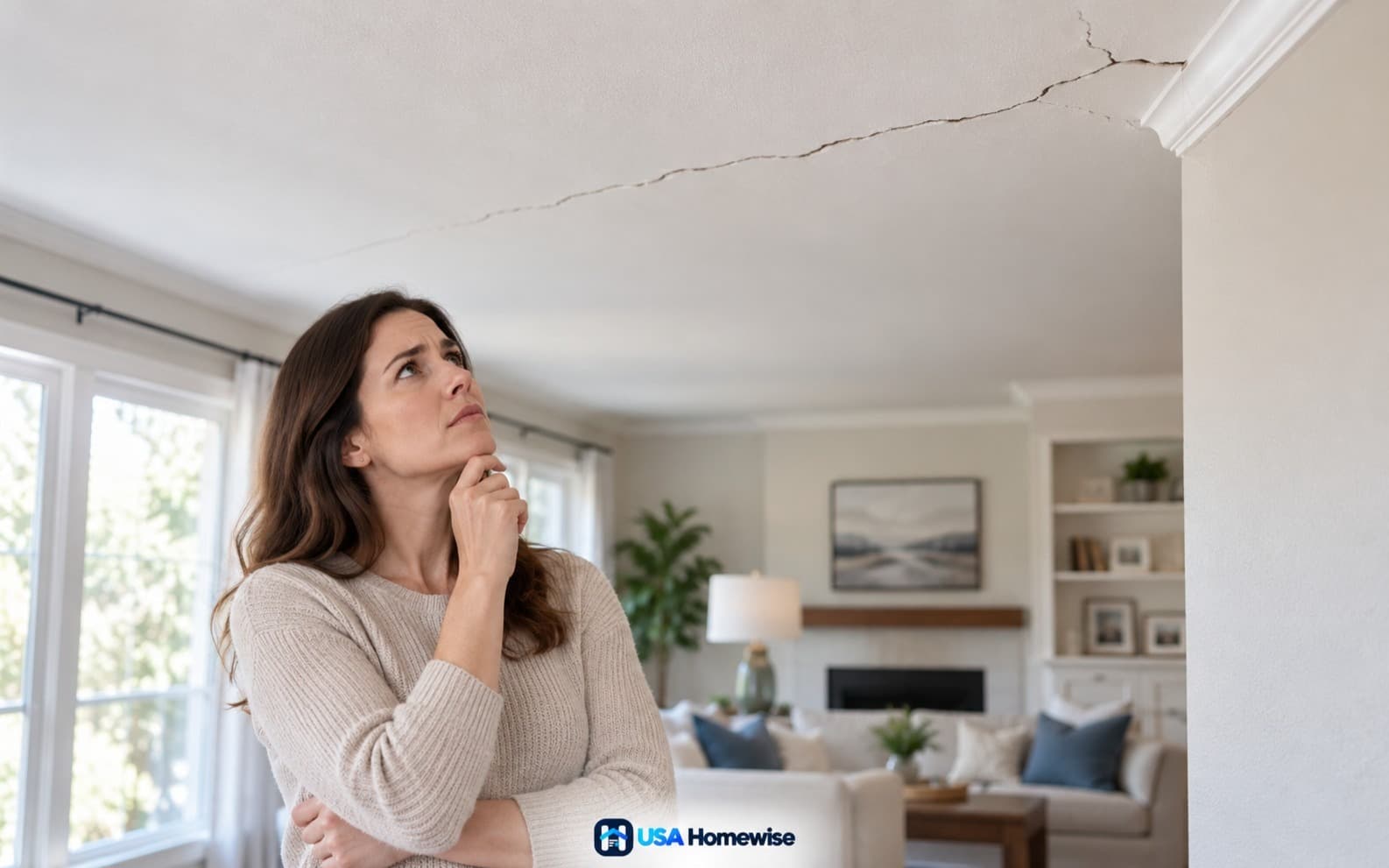
A ceiling crack may be a minor finish defect—or a sign of moisture, loose plaster, or structural movement. Changes over time and nearby warning signs matter more than shape or width alone.
Seek prompt help for active leakage; do not wait for a stain to become larger. Shutting off domestic water will not stop a roof leak or every condensate problem, and water already trapped above the ceiling may continue to drain.
Record Where and When the Stain Appears
You do not need to recreate the leak to collect useful clues. Record what was happening when you first noticed it:
Weather: Was it raining, windy, or thawing after snow?
Plumbing use: Had someone used an upstairs shower, toilet, sink, or washer?
AC operation: Had the system been running heavily?
Location: What room, attic area, roof feature, or equipment is above or near the stain?
Changes: Is the stain growing, recurring, peeling, or accompanied by a musty odor?
Take dated photos from the same position. Use a fixed feature, such as a nearby wall or fixture, to help compare the stain’s size without touching the ceiling.
Color alone cannot establish a stain’s age, cause, or whether the leak is active. A dry-looking stain may come from an intermittent leak that returns with the next storm or shower. Conversely, a lingering stain can remain after a previous leak has been repaired. Repair records and moisture assessment are more useful than appearance alone.
Match the Pattern to a Possible Source
Use these patterns to decide where to investigate first—not as proof of the cause.
Pattern
Possible source
Safest next step
Stain appears or expands during rain
Roof covering, flashing, or another exterior water-entry point
Observe from the ground and arrange a roofing inspection
Stain follows snowmelt or freezing weather
Meltwater entry, potentially associated with ice buildup
Call a roofer; stay off icy roofs and ladders
Stain follows upstairs bathroom or appliance use
Supply connection, drain, shower waterproofing, or water escaping onto the floor
Stop using the suspected fixture and contact a plumber
Dripping continues when fixtures are not in use
Pressurized supply leak or previously accumulated water
Shut off domestic water if appropriate and safe; seek prompt help
Stain develops during heavy AC use
Condensate drain or pan problem, or condensation on cold ducts
Check only safely accessible areas and contact an HVAC technician
Several damp areas appear in humid conditions
Condensation, insulation or ventilation problems, or more than one leak
Have the moisture source and building conditions assessed
A stain below a bathroom does not automatically prove that bathroom is leaking. Likewise, a top-floor stain may come from attic plumbing or HVAC equipment rather than the roof. Follow the observations rather than relying on location alone.
Inspect Accessible Areas Without Opening the Ceiling
Roof and attic clues
From the ground, look for displaced roofing, overflowing gutters, and obvious damage near chimneys or roof penetrations. Binoculars may help. A roof that looks intact from below can still have concealed flashing or other defects.
Inspect an attic only if access is safe, there are no electrical or structural hazards, and you can remain on secure flooring or a designated walkway. If possible, look from the access point with a flashlight. Useful clues include:
Water tracks on the underside of roof decking or along framing.
Damp or stained insulation.
Moisture near vents, chimneys, or roof transitions.
Do not step onto insulation or the ceiling surface between joists. Do not disturb unknown insulation, touch wet wiring, or enter an unsafe attic. Leave roof climbing and hose testing to qualified professionals; trying to reproduce a roof leak can add damage and create fall hazards.
Upstairs plumbing clues
Check dry, accessible areas in the room above and nearby. Look inside sink cabinets, around toilet bases, beside appliances, and near exposed connections. Water escaping onto a floor can enter a gap and appear on the ceiling below without a pipe directly above the stain leaking.
A leak associated with shower use may involve supply plumbing, the drain, the enclosure, or concealed waterproofing. Replacing visible caulk will not correct a failed concealed waterproofing system.
Do not repeatedly flush a toilet, fill a tub, or run an appliance to reproduce an active leak. Stop using the suspected fixture and let a plumber decide whether controlled testing is needed. Depending on the finding, a shower waterproofing repair may also require a qualified remodeling contractor.
AC and condensation clues
If an air handler or condensate piping sits above the affected ceiling, look only where you have safe access. Standing water in an auxiliary drain pan, drips near the equipment, or wet duct insulation are useful clues for an HVAC technician.
If the AC appears to be leaking, switch it off at a dry, safely accessible thermostat and arrange service. Do not bypass a float switch, open electrical compartments, or pour chemicals into an unidentified drain line.
Condensation is different from rainwater or a plumbing leak: moisture can collect when humid air meets a sufficiently cold surface. Wet ducts or recurring dampness may require assessment of insulation, air leakage, humidity, and ventilation—not simply a drain cleaning.
A moisture meter can help compare a stained area with nearby unaffected material and track changes during drying. It cannot identify whether moisture came from a roof, pipe, or condensation.
Readings depend on the device, material, and conditions; concealed metal can affect some meters. Follow the manufacturer’s instructions, and do not insert probes near suspected wiring or into unstable material. Do not risk reaching a damaged ceiling just to obtain a reading.
A thermal camera shows surface temperature differences, not water itself. Professionals may use these tools alongside inspection and carefully selected access openings. Neither a single meter reading nor a thermal image proves that an entire ceiling cavity is dry.
Call the Right Professional
Choose help based on the strongest evidence and the immediate hazards.
Professional
When to call
Plumber
Leakage associated with fixtures, supply pipes, drains, or upstairs plumbing
Roofer
Staining linked to rain, snowmelt, flashing, or roof damage
HVAC technician
Condensate overflow, wet duct insulation, or moisture around an air handler
Electrician
Any water exposure involving fixtures, wiring, or electrical equipment; have affected equipment assessed before reuse
Water-damage restoration professional
Extensive saturation, hidden moisture, wet insulation, or materials that cannot be dried promptly
Qualified structural professional
Sagging, movement, or suspected damage beyond the ceiling finish
A restoration company may manage drying without repairing the original roof or plumbing defect. Make sure both tasks are addressed.
Suspected sewage contamination requires professional cleanup rather than ordinary household drying. Extensive or recurring mold, suspected concealed growth, and mold affecting HVAC equipment also warrant qualified help.
Share your photos, timing notes, and any changes after shutting off water or equipment. If the source is unclear, ask how the professional will narrow it down and why any proposed opening is necessary.
Dry and Repair Before Repainting
Once the source is stopped, address the moisture and material damage before restoring the finish.
Assess what can remain. Sagging, crumbling, or otherwise damaged drywall may need replacement. Wet insulation may need removal or replacement so the cavity can dry.
Begin drying promptly once the area is safe. For clean-water damage, drying wet materials within roughly 24–48 hours is a mold-prevention goal, not a guarantee or a reason to delay action. Do not direct fans across visible mold or contaminated materials.
Check concealed moisture where warranted. A dry ceiling surface does not establish that insulation and framing behind it are dry.
Confirm the source repair. Ask whether professional controlled testing or monitoring during normal weather or use is appropriate. Do not recreate a leak yourself.
Repair and finish. After affected materials are dry and necessary replacements are complete, use a suitable stain-blocking primer and ceiling paint according to product instructions.
Before cutting, scraping, or sanding an older ceiling, consider hazardous materials. Paint in pre-1978 homes may contain lead, and some older ceiling materials or insulation may contain asbestos. Have suspect materials assessed before disturbing them; use appropriately qualified professionals when required.
The lasting solution is to stop the water, dry the concealed space, and repair damaged materials. Primer can help hide a residual stain, but it cannot stop a leak or make a weakened ceiling safe.
Frequently asked questions
Does a brown ceiling stain always mean the roof is leaking?
No. Plumbing leaks, AC condensate problems, and condensation can also cause ceiling stains. The timing relative to rain, fixture use, or AC operation is more useful than color for narrowing down the source.
Can a ceiling stain be dry even if the leak is not fixed?
Yes. Intermittent leaks may dry between storms or fixture use, and concealed materials can remain wet after the surface dries. Investigate the cause rather than assuming a dry-looking stain is harmless.
Should I puncture a ceiling bulge to drain the water?
No. Stay clear and keep others away. Puncturing a bulge can release water and unstable ceiling material, and hidden electrical hazards may be present. Arrange urgent professional assessment.
Why does the ceiling keep dripping after I shut off the water?
Water already trapped above the ceiling or remaining in plumbing can continue to drain. The source might also be rainwater or AC condensate, which the domestic water shutoff does not stop. Continued dripping needs prompt assessment, especially near electrical equipment or a sagging ceiling.
Can I paint over a ceiling water stain after it dries?
Only after the moisture source is corrected, concealed materials are sufficiently dry, and damaged material is repaired or replaced. Use an appropriate stain-blocking primer before painting, following product instructions.
Who should I call if I cannot tell where a ceiling leak starts?
Start with the strongest clue: a roofer for rain-related staining, a plumber for fixture-related leakage, or an HVAC technician for moisture near cooling equipment. A water-damage professional can assess saturation and drying needs, but you may still need a separate trade to repair the source. Electrical exposure or ceiling instability takes priority.